
Nous évoluons dans une société remplie de défis. L’écologie représente certainement le plus grand et le plus important d’entre eux. Après des décennies d’insouciance, c’est à nos générations de faire la différence et de rendre le monde plus durable. Si les objectifs sont grands, cela ne signifie pas qu’il faut faire une croix sur tous les petits plaisirs de la vie. Il suffit parfois de repenser les technologies, les systèmes et d’innover. C’est le cas de la piscine. Certains affirment que c’est une aberration écologique et pourtant il est possible de réconcilier les joies de l’eau et l’environnement. ZOOM.
Why isn’t the swimming pool environmentally friendly and sustainable?
With summers getting hotter and hotter, the idea of installing a swimming pool at home is starting to appeal to many of us. It’s hard to resist a refreshing dip in the middle of a heatwave… However, this might increase our carbon footprint… So what should we do?
Before answering this question, it is important to consider the factors that make a swimming pool environmentally unfriendly.
A traditional swimming pool obviously has an impact on the environment. It emits CO₂ and consumes various forms of energy. These factors contribute to the household’s carbon footprint.
- Chemicals: The filtration systems in traditional swimming pools rely on chemicals such as chlorine or bromine. These chemicals are powerful disinfectants, and both their use and manufacture have an impact on the environment. It is important to remember that these products are also harmful to swimmers and animals.
- Electricity consumption: filtering and heating a swimming pool use electricity. A swimming pool can therefore quickly become an energy guzzler. Depending on the size of the pool, the power and efficiency of the filtration and heating systems, as well as the pool’s location (indoor or outdoor), the bill can quickly rise – and so can the impact on the planet.
- Water consumption: the use of mains water is also a source of pollution. Indeed, using drinking water for swimming pools depletes groundwater reserves. Not to mention the fact that this puts a strain on the water treatment system, which consumes ever-increasing amounts of electricity.
How can you reduce the environmental impact of your swimming pool?
As we have seen, traditional swimming pools have a significant impact on the environment. However, swimming pools have come a long way since then; innovations are constantly reducing this impact and thus helping to bridge the gap between swimming pools and the environment.
This is the case with the Vitii eco-friendly filtration system, which transforms ponds into genuine natural swimming pools.
The eco-friendly swimming pool for a more sustainable future
Vitii offers a filtration system with numerous environmental benefits.
- Natural filtration without plants: This filtration system is based on nature’s own principles. This is how Vitii has eliminated all chemicals from the filtration process. You can swim in water that is as clean and pure as a mountain lake.
- Reduced water consumption. La technologie Vitii permet de ne pas accumuler des sous-produits polluants. Ainsi de simples backwashes nettoient le filtre et un minimum d’eau est rejetée. De plus, cette eau peut être revalorisée pour arroser vos plantes ou votre potager.
- Lower electricity consumption: the filtration system runs more slowly than in a traditional swimming pool, resulting in energy savings. The Vitii natural swimming pool can also be combined with green energy sources!
- More durable materials: with no corrosive agents used in the pool filtration system, materials deteriorate less quickly, leading to long-term savings.
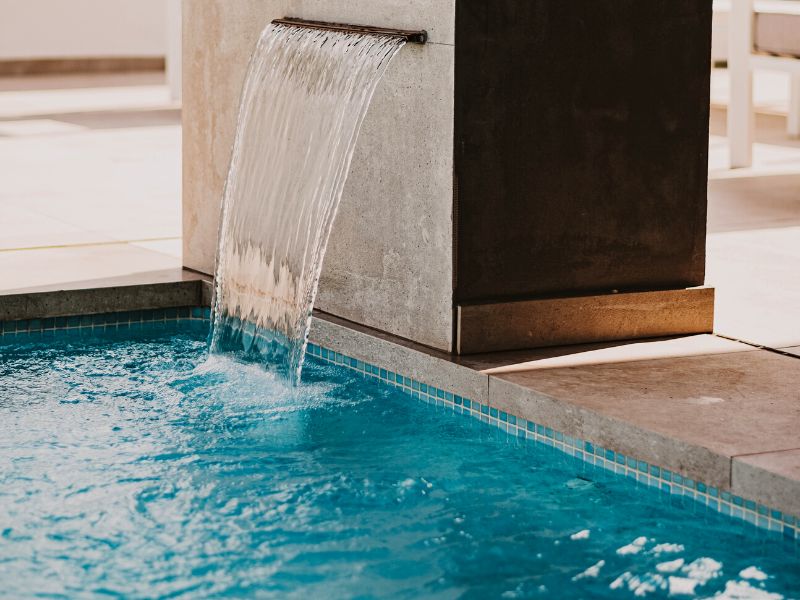
The swimming pool industry has evolved and adapted to address environmental challenges.
At Vitii, our filtration system offers the perfect solution for enjoying a healthy swim with a minimal environmental impact. Please don’t hesitate to contact us to find out more about our eco-friendly filtration system.
